Containment that fits the situation
We use critical barriers, negative air, and controlled entry when needed so spores stay inside the work area, not across the rest of your home or business.
Serving Naperville, Illinois & surrounding areas
24/7 Emergency Response
If you smell a musty odor, see staining, or have had a recent leak, act quickly. Our certified team contains the area, removes contaminated materials safely, and documents the work so you know what was done and why.
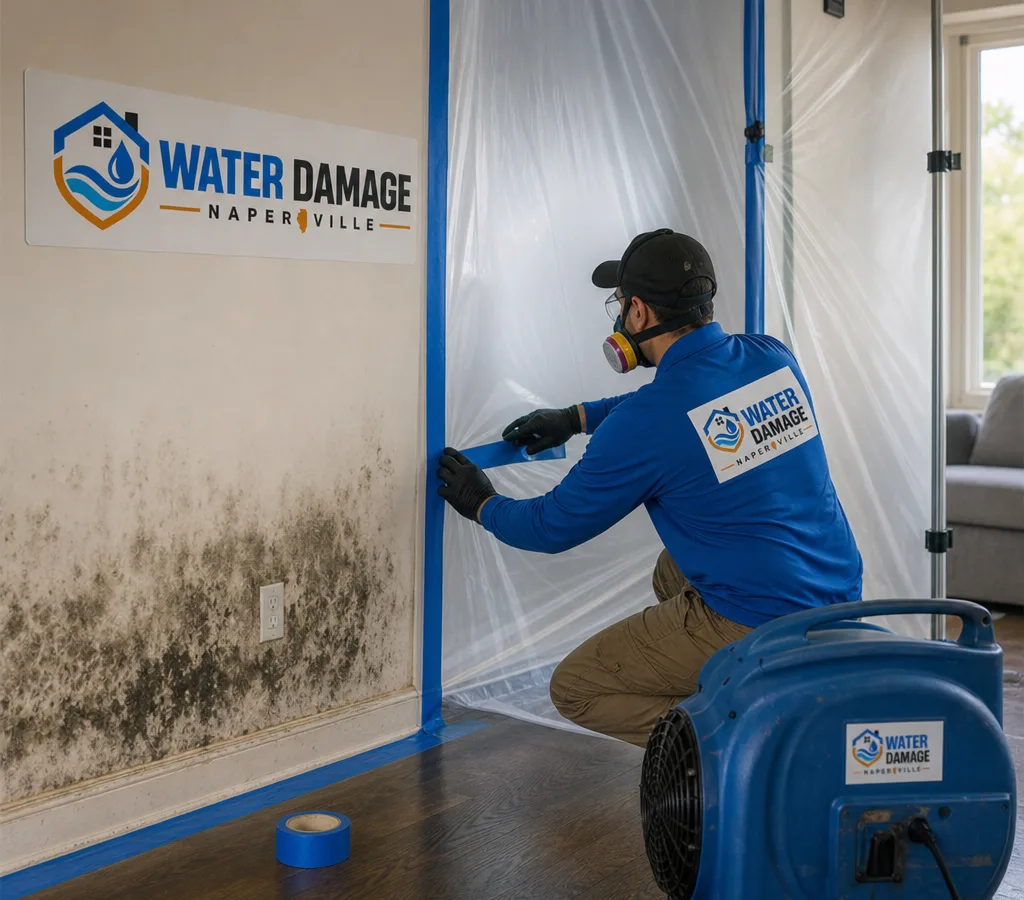
Searching for mold remediation Naperville IL usually means something already feels urgent: a damp basement smell, a hidden leak behind drywall, or a tenant complaint in a commercial suite. Mold can spread when it is disturbed, so the first priority is to control airflow and protect clean areas while the source and affected materials are identified.
Water Damage Naperville performs mold remediation in Naperville with a job plan that focuses on containment first, then removal and cleaning, followed by drying and verification. You receive a clear scope and scheduling plan before work starts, including which areas may need to be opened and which materials can be cleaned rather than removed.
Many local mold problems follow roof or window leaks, plumbing failures, and wet basements during heavy Midwest rains. Remediation only holds when the moisture problem is addressed, so our process starts by confirming the likely source and the conditions that allowed growth.
We use critical barriers, negative air, and controlled entry when needed so spores stay inside the work area, not across the rest of your home or business.
Moldy drywall, insulation, and carpet pad often need removal. We bag out debris properly and keep pathways protected during transport.
HEPA air scrubbers and HEPA vacuuming help capture fine particles. We clean surfaces in the containment zone using methods appropriate to the material.
Remediation is not complete until the area is dry enough to prevent regrowth. We monitor moisture in framing and adjacent materials as the job progresses.
You will know what was found, what was removed, and what steps were taken. If conditions change after materials are opened, we review options before expanding the scope.
Mold is often easy to smell and hard to pinpoint. In Naperville, we commonly find it in areas that stay cool, damp, or poorly ventilated.
Typical problem zones include:
If the concern followed a burst pipe, appliance leak, or flood, it helps to address the water event first and confirm whether microbial growth developed in hidden cavities. Where water remains or materials are actively wet, water damage restoration may run alongside remediation so drying and containment stay coordinated.
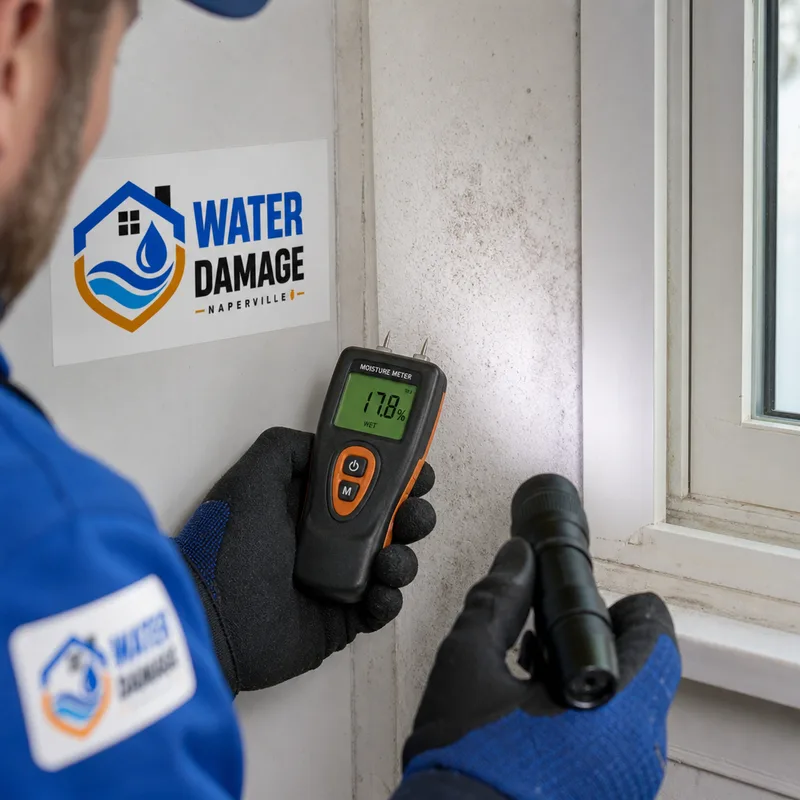
We look for visible growth, staining, and water pathways, then check surrounding moisture levels to understand how far the issue may extend beyond what you can see.
We isolate the work zone with poly barriers and establish controlled airflow to protect the rest of the property, especially in occupied homes and active commercial spaces.
If porous materials are contaminated, they are removed to reach clean, dry structure. We keep cuts clean and intentional so repairs are predictable.
We remove dust and residue from framing and remaining surfaces using HEPA filtration and suitable cleaning methods for wood, masonry, and other substrates.
We confirm progress with moisture readings and adjust equipment placement or containment as needed. Remediation is tied to moisture, not the calendar.
We review what was done, which materials were removed, and the next steps for repairs or prevention, with a clear written scope when needed.
Mold remediation in Naperville typically ranges from about $1,500 to $6,500+ depending on the affected area, how much demolition is needed, and how much containment and air filtration the job requires. A small, contained issue often lands on the lower end, while multi-room or attic and basement projects with heavy material removal and drying can run higher.
Final cost changes with square footage, access, the amount of wet or porous material to remove, HVAC proximity, and whether the moisture source is still active. The exact price is confirmed after an on-site inspection and a written scope of work.
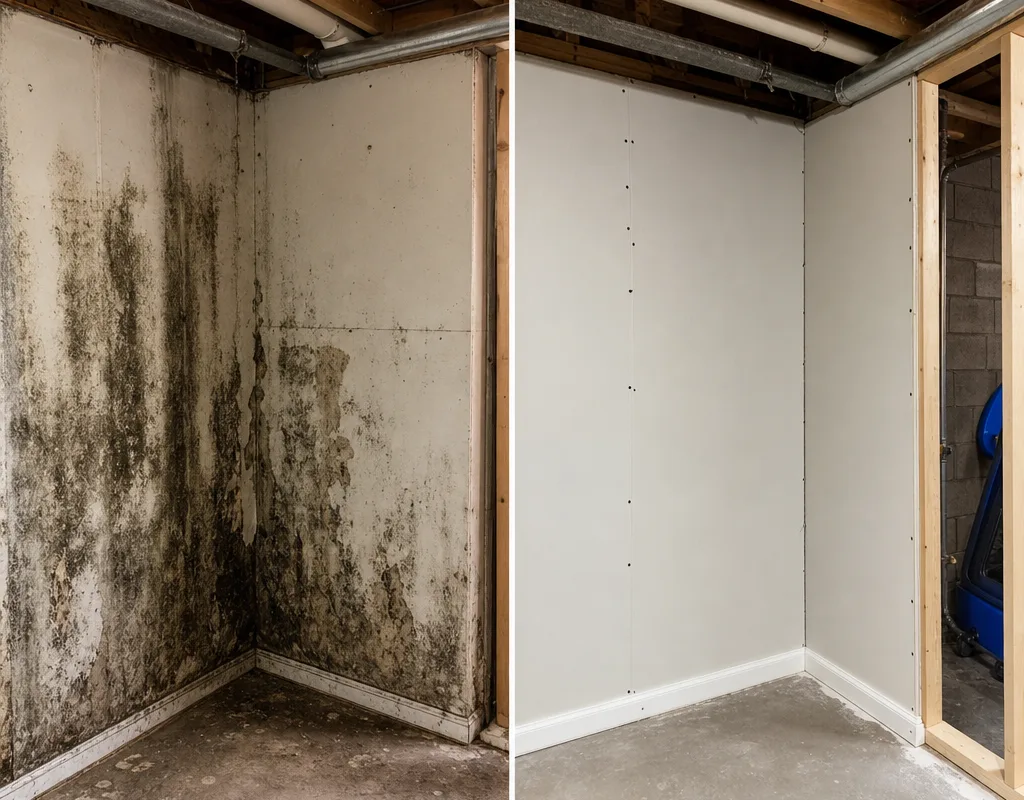
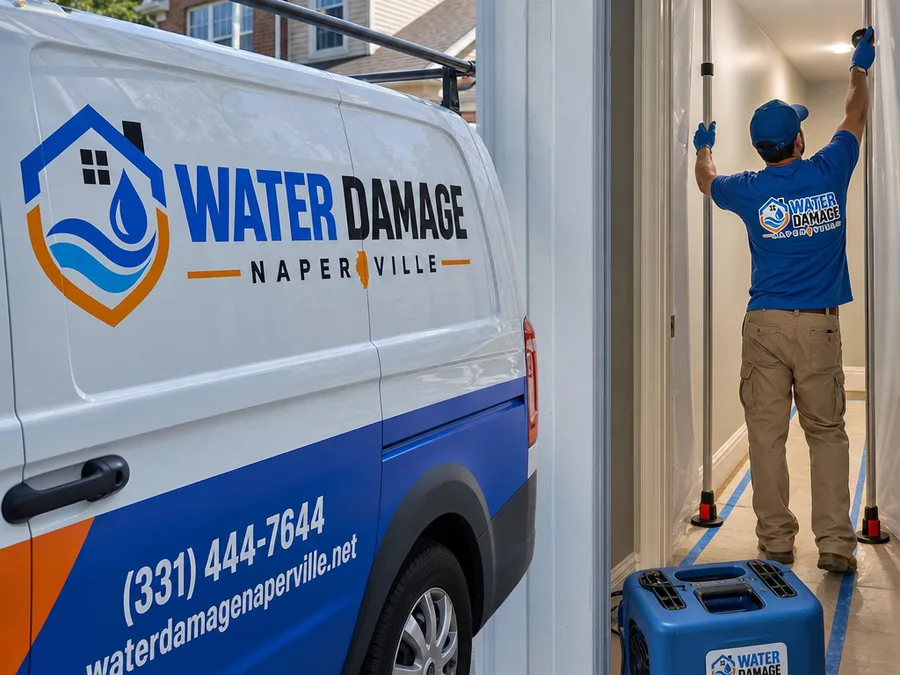
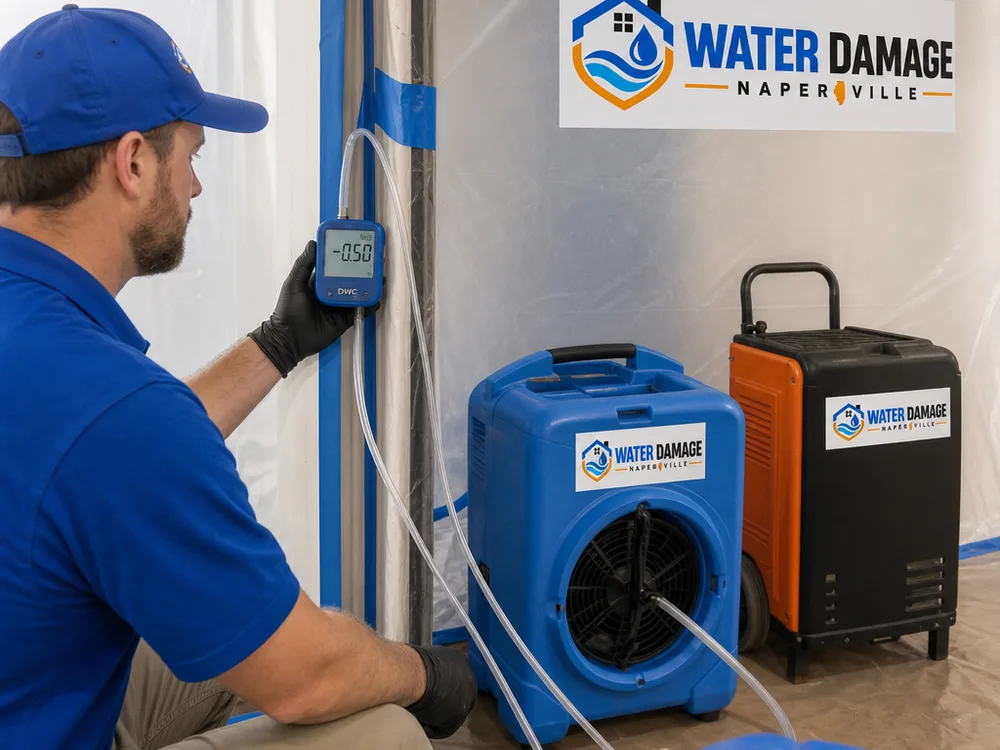
Containment, moisture correction, and clear records help property owners understand the work and move forward confidently.
“We had a musty smell in the basement that kept coming back. They set up containment, removed the damaged drywall, and explained what was causing the moisture. The house smelled normal again within days.”
“Our tenant reported spotting near a window wall. The crew worked around business hours, kept the area sealed off, and left the suite clean. The written scope made it easy to document everything for our records.”
Start times depend on the affected area and whether containment and drying equipment are needed, but urgent situations are prioritized because active moisture and disturbance can make conditions worse. After a quick intake, we schedule an on-site assessment to define the scope and set a start date that fits access and occupancy.
Porous materials such as drywall, carpet pad, and insulation often need removal if contaminated because they cannot be reliably cleaned through their full thickness. Non-porous and semi-porous materials, including many framing members, masonry, plastics, and metals, can often be cleaned after source moisture is controlled.
Many projects can be completed while the home remains occupied if the work zone can be isolated and a safe pathway maintained. If the affected area includes bedrooms, the HVAC system, or large open areas, we may recommend temporary relocation from specific rooms until removal and cleaning are complete.
In most cases, yes, because the musty odor typically comes from active growth and damp, contaminated materials. Odor can linger if hidden wet materials remain, so effective remediation includes locating the source, removing contaminated porous materials, cleaning remaining structure, and drying it to a stable level.
Sampling is not required for every job, but it can help when the source is unclear, symptoms are reported without visible growth, or documentation is needed. If sampling is appropriate, we discuss what question the test should answer and how results relate to site conditions.
Avoid disturbing the area because scrubbing or pulling materials can spread spores. If possible, keep doors closed and reduce foot traffic. If there is an active leak, stop the source if it is safe, and gather notes about when the issue started and where moisture was seen.
Tell us what you are seeing and where it is happening. We will assess the affected areas, explain the containment and removal steps, and provide a written scope and schedule for mold remediation in Naperville.