Containment that matches the situation
A small area in a bathroom may need localized containment, while a finished basement often needs a larger negative-air zone to protect adjacent rooms and return ducts.
Serving Naperville, Illinois & surrounding areas
24/7 Emergency Response
If you smell musty odors or see staining after a leak, we respond quickly, isolate the area, and remove mold safely so your space can get back to normal with clear documentation and next steps.
When you search for mold removal Naperville IL, you are usually dealing with one of two things: visible growth on drywall or framing, or a persistent damp smell that showed up after a plumbing issue, roof leak, or wet basement. Mold is a moisture problem first. Removal only lasts when the wet materials are dried or removed and the source is addressed.
Water Damage Naperville handles Naperville mold removal with a job plan built around containment, safe material removal, and careful cleaning of the remaining structure. We work in finished basements, bathrooms, laundry areas, kitchens, crawlspaces, and commercial spaces where downtime matters.
If your situation started with a leak or flooding, our team can also help you stabilize the space before mold spreads. Many customers begin by contacting Water Damage Naperville to describe what happened and what you are seeing now, then we schedule an inspection to confirm what is affected and what is not.
A solid mold removal plan does three things: it prevents cross-contamination, removes materials that cannot be salvaged, and leaves the area clean enough to rebuild.
You should expect us to:
In Naperville, a lot of mold calls trace back to wet basements after heavy rains, slow plumbing leaks, or condensation around HVAC and ductwork. The fix is rarely “spray and go.” It is a controlled process with documentation you can hand to a property manager, buyer, or insurer if needed.
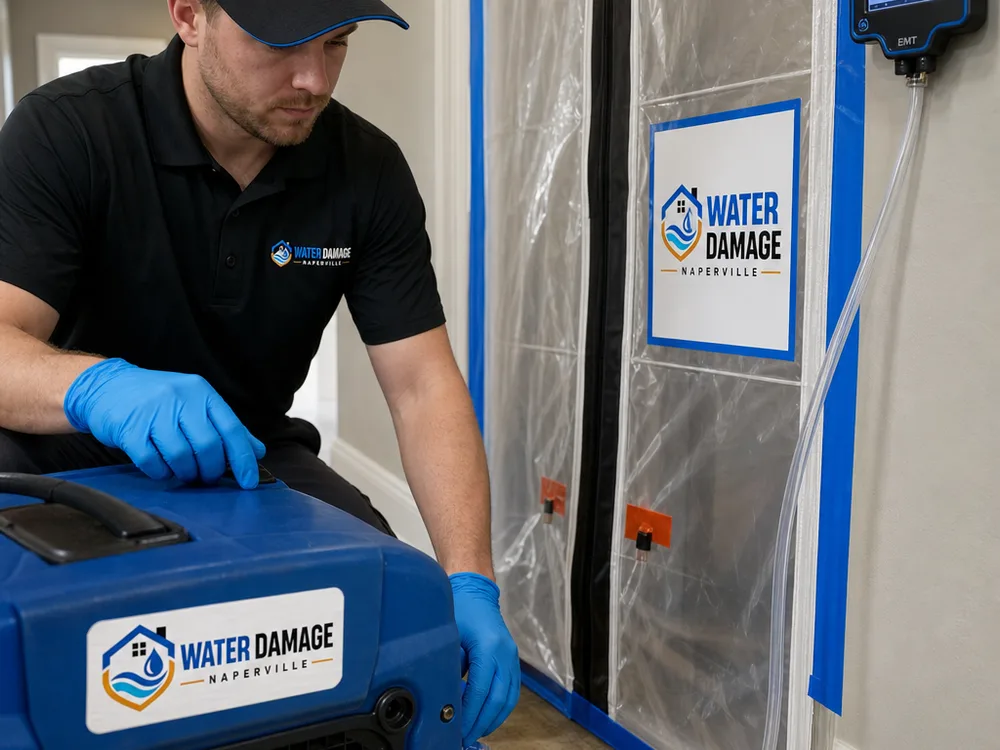
A small area in a bathroom may need localized containment, while a finished basement often needs a larger negative-air zone to protect adjacent rooms and return ducts.
We outline what materials are coming out, what gets cleaned, and what stays. That keeps rebuild decisions simple and prevents surprise work mid-job.
Air scrubbing and HEPA vacuuming reduce airborne particles during removal and final cleaning, especially when drywall or insulation must be removed.
If the moisture source is still active—or returns seasonally—removal alone does not solve it. We help you identify the likely drivers so you can correct them.
After mold cleanup, we explain what can be put back right away and what should wait until drying targets are met, so materials do not get trapped wet.
We inspect the affected room(s), check adjacent areas, and take moisture readings to understand what is wet behind the surface and what is already dry.
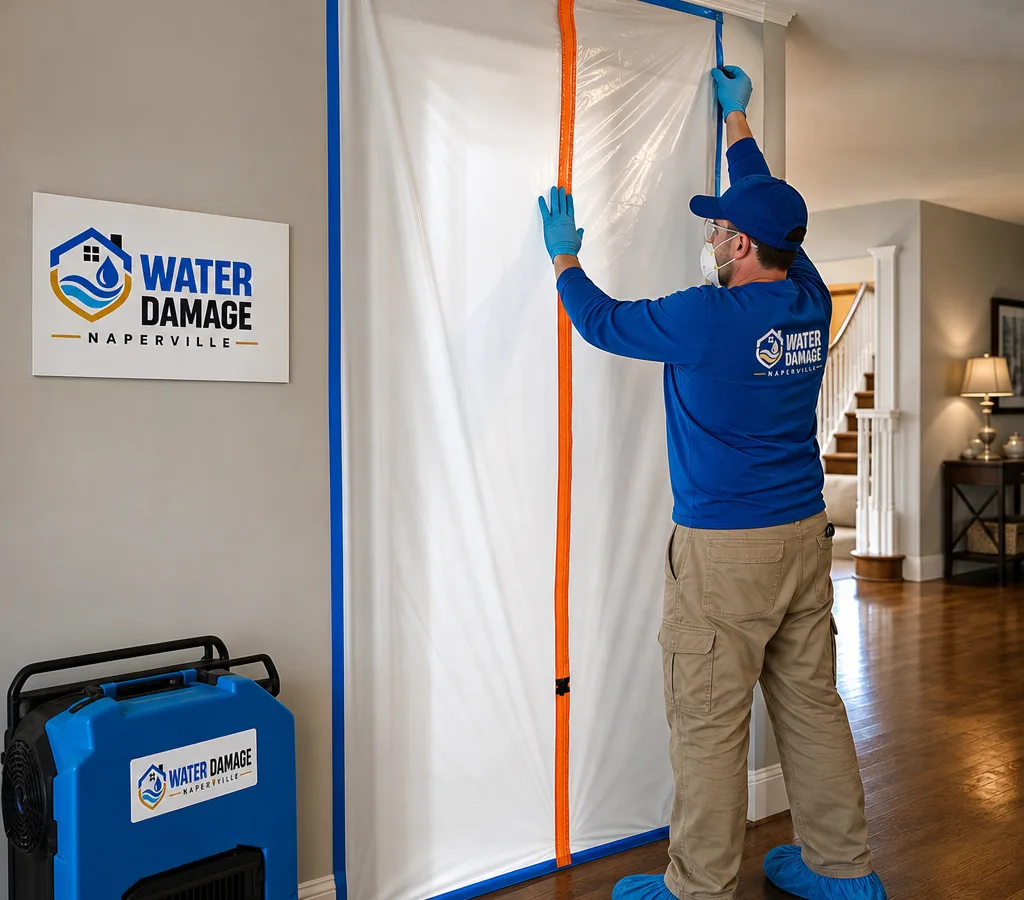
We isolate the work area with poly barriers and establish negative air when appropriate. This is a key step for mold removal Naperville projects in finished spaces.
We remove contaminated porous materials using safe bag-out practices. Salvageable structure and contents are protected or moved as needed.
We HEPA vacuum, wipe, and clean framing and other remaining surfaces. Treatments are selected based on the material and how it will be finished later.
We verify that drying goals are met for the area. If humidity or a hidden leak is still present, we outline what must change before rebuild.
You receive a clear summary of what was removed, what was cleaned, and what the rebuild area looks like now, so you can move forward with confidence.
Mold removal in Naperville typically ranges from about $1,000 to $6,000+, with small, contained areas often landing around $1,000 to $2,500 and larger basement, crawlspace, or multi-room projects commonly $3,000 to $6,000+.
Your final price depends on the affected square footage, how much drywall or insulation must be removed, containment complexity, access (tight crawlspaces cost more), and whether drying or odor treatment is needed. The exact scope and cost are confirmed after an on-site inspection.
Mold growth follows water, and the pattern usually points to the cause. During Naperville mold removal visits, these are common scenarios we see.
Request Emergency ServiceMold can develop behind baseboards or drywall after seepage, a sump issue, or previously wet carpet. Finished walls can hide moisture, so testing the wall cavity matters.
Persistent condensation, a slow toilet supply leak, or poor exhaust can lead to growth around drywall edges, vanity toe-kicks, or behind shower walls.
Small supply-line leaks or a dishwasher leak can soak cabinets and the wall behind them.
Roof leaks can wet insulation and ceiling drywall, sometimes presenting first as staining.
Musty odors often appear in storage rooms, break rooms, or build-outs where water ran behind finished surfaces.
If you are also dealing with active water intrusion or a recent leak, stabilizing moisture quickly reduces how far the problem spreads. In those cases, starting with professional water damage restoration often makes mold cleanup smaller and simpler because materials are dried before mold has time to take hold.
If you are deciding what has to be removed versus what can be cleaned, start with an inspection and a written scope. You will know what the work area will look like when we are done and what needs to happen before any rebuild.
Call for Emergency HelpMost mold jobs can start as soon as an inspection confirms the scope and the area can be safely contained. If there is active moisture (a current leak or wet materials), the first step is to stabilize and dry the space so the cleanup work does not chase a moving target.
Testing is not required for many mold removal projects because visible growth plus moisture is enough to define the cleanup scope. If you need lab results for a property file, tenant documentation, or peace of mind, we can discuss sampling options and how results affect the plan.
Sometimes, yes, if the growth is on a non-porous surface and the drywall core is not wet or contaminated. If mold is in the paper face, inside the wall cavity, or the drywall is soft or swollen, removal usually means controlled demolition of the affected section.
It depends on the location and how large the work area is. With proper containment and negative air, many households can remain in the home while we work, but you may want to avoid the immediate area, especially if anyone has asthma, allergies, or other sensitivities.
A typical scope includes containment setup, removal of unsalvageable porous materials, HEPA vacuuming, surface cleaning, and a final condition check with moisture readings where relevant. Rebuild (new drywall, trim, paint) is usually a separate step after the area is confirmed dry and clean.
Mold returns when moisture returns. The most reliable prevention is fixing the water source (leak, seepage, ventilation issue) and confirming the area dries to normal moisture levels before you close up walls or reinstall finishes.
We use physical containment (poly barriers), controlled airflow with negative air pressure when appropriate, and HEPA filtration during removal and cleaning. We also use careful bag-out practices for debris so it does not track through clean parts of the property.
Tell us what you are seeing and where it is happening. We will inspect the area, explain what is affected, and provide a written scope for mold removal in Naperville so you can move forward with the right next step.