Moisture-focused findings
Mold follows moisture. We document where building materials are damp so the fix targets the cause, not just what you can see.
Serving Naperville, Illinois & surrounding areas
24/7 Emergency Response
If you smell musty odors, see staining, or had a recent leak, we schedule quickly, inspect carefully, and deliver a clear report with practical next steps for your property.
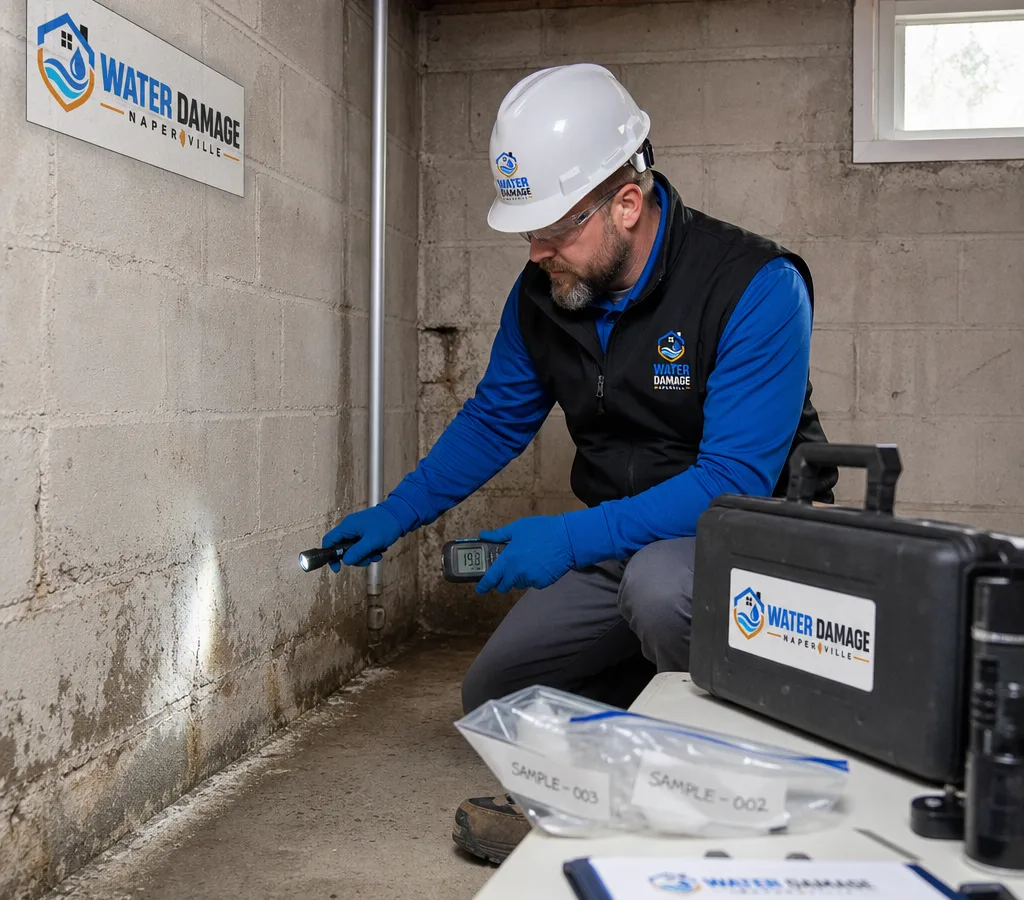
A proper Naperville mold inspection answers three questions: where the moisture is coming from, where mold is likely growing—including hidden areas—and what should happen next.
In Naperville, mold concerns often follow common Midwest building and weather realities: spring and summer humidity, wet basements after heavy rain, ice dams and roof leaks in winter, and plumbing failures that show up days later inside drywall or under flooring. Everyday issues such as poor bathroom ventilation, a damp crawl space, or a slow sink supply-line leak can also trigger growth.
Water Damage Naperville performs inspections for homeowners, property managers, and buyers who need an unbiased, documented look at conditions in the property. If you also need broader help after a leak or flood, we will point you toward the appropriate next step based on the inspection findings.
What you can expect from our inspections:
A thorough mold inspection is more than spotting surface growth. We look for conditions that support mold, then narrow down the likely source.
Typical inspection points include:
When conditions call for it, sampling may help confirm what is present and support a remediation plan. It is not automatically the right choice in every home; the decision depends on visible conditions, occupant concerns, and whether results will change the next step.
If you are comparing mold inspection options in Naperville, ask whether the inspector will identify moisture pathways and document readings. Moisture data is often the difference between guessing and correcting the underlying cause.
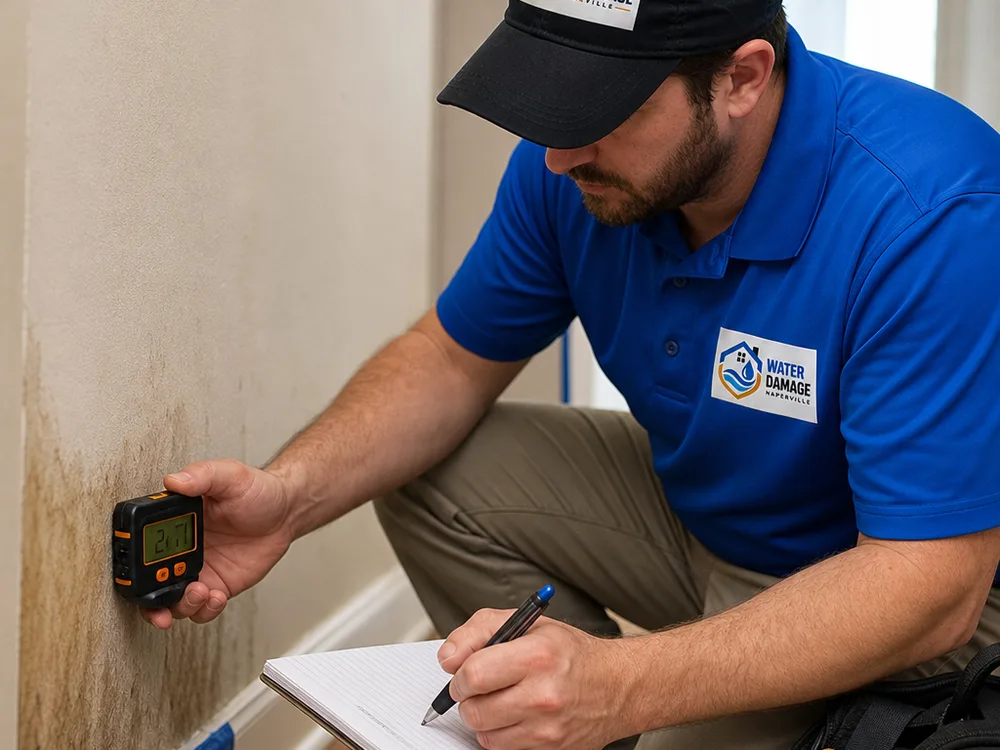
Mold follows moisture. We document where building materials are damp so the fix targets the cause, not just what you can see.
You receive a written report that explains the areas inspected, what we observed, and what steps typically come next.
If remediation is needed, we outline what areas are likely affected and what to ask for in a written scope before any work starts.
We help you sort urgent health and building concerns from cosmetic staining or isolated issues, so you can act in the right order.
Clean work practices, careful access to finished spaces, and a focus on minimizing disruption while still getting answers.
We start with a brief intake: where you have noticed odors, staining, recent leaks, or health concerns, plus any areas that have been previously repaired.
We inspect the structure and use moisture meters to track dampness in materials. This helps identify likely hidden growth behind drywall, under flooring, or in insulation.
If sampling is appropriate, we explain options such as air samples or surface samples and what each can and cannot tell you about the indoor environment.
You receive clear findings, photos when helpful, and a prioritized plan to address the moisture source, contain impacted areas, and confirm clearance steps when needed.
Mold inspection in Naperville typically ranges from about $250 to $650 for a standard residential visit, with larger homes or more complex situations running $650 to $1,200+. A basic visual and moisture assessment is usually at the lower end, while inspections involving multiple samples and more extensive moisture mapping trend higher.
Final pricing depends on home size, the number of areas of concern, accessibility—including finished basements, tight crawl spaces, and high attics—and whether sampling is needed to answer the question at hand. Exact cost is confirmed when we review your situation and the inspection scope.
These homeowners used inspection findings to understand hidden moisture and plan the appropriate next step.
“We were sure the smell was coming from the basement, but the moisture readings showed the worst area was actually behind a first-floor bathroom wall. The report made it easy to talk to the contractor about what needed to be opened up and why.”
“We needed documentation for a home purchase. The inspection was straightforward, the findings were explained in plain terms, and we got a clear list of what to address before closing.”
Most mold inspections take about 60 to 120 minutes on site, depending on home size and how many areas need moisture checks. If the concern involves a finished basement, multiple bathrooms, and an attic, plan on the longer end because each area needs documented readings and a careful look for water pathways.
An inspection is often enough when there is visible growth and a clear moisture source, because the next step is to correct moisture and remove affected materials safely. Testing is most useful when growth is suspected but hidden, when occupants report symptoms without a clear source, or when documentation is needed for a landlord, buyer, or contractor to define a remediation scope.
We commonly check basements, crawl spaces when present, attic sheathing near roof penetrations, bathrooms around tubs and toilets, laundry areas, and exterior wall corners where condensation can occur. In many Naperville homes, a finished basement or lower-level storage area can hide damp materials behind baseboards or wall coverings, so moisture mapping is important.
Yes. We use non-invasive tools such as moisture meters to identify elevated moisture and likely hidden impact, then recommend targeted opening only when necessary to confirm conditions or support a remediation plan. This keeps the investigation focused instead of creating unnecessary demolition.
Yes. Your report explains what was observed, the likely moisture driver, and the typical next steps, including what to ask for in a written remediation scope and which areas should be contained. The goal is to provide clear direction before work starts so the fix addresses both the mold and the moisture cause.
Schedule as soon as you can once materials have been wet or you notice musty odors, especially if drywall, carpet, or insulation stayed damp. Mold can begin growing quickly in wet organic materials, so an early inspection helps determine whether drying was sufficient or hidden areas need to be checked.
Yes. Mold inspection can be used as due diligence when buying or selling, especially if there is a history of leaks, a musty smell, or visible staining in a basement or attic. We focus on documenting conditions and moisture indicators so you can make informed repair or negotiation decisions.
Tell us what you are seeing or smelling and when it started. We will schedule your Naperville mold inspection, document findings, and give you a practical plan to protect the property and move forward with confidence.