After a leak or water event
If materials stayed wet for more than a day or two, mold can develop behind baseboards, under flooring, or inside wall cavities even when surfaces look dry.
Serving Naperville, Illinois & surrounding areas
24/7 Emergency Response
If you smell something musty, see staining, or have unexplained allergy symptoms indoors, a certified inspection can confirm whether mold is present, where it is coming from, and what to do next.
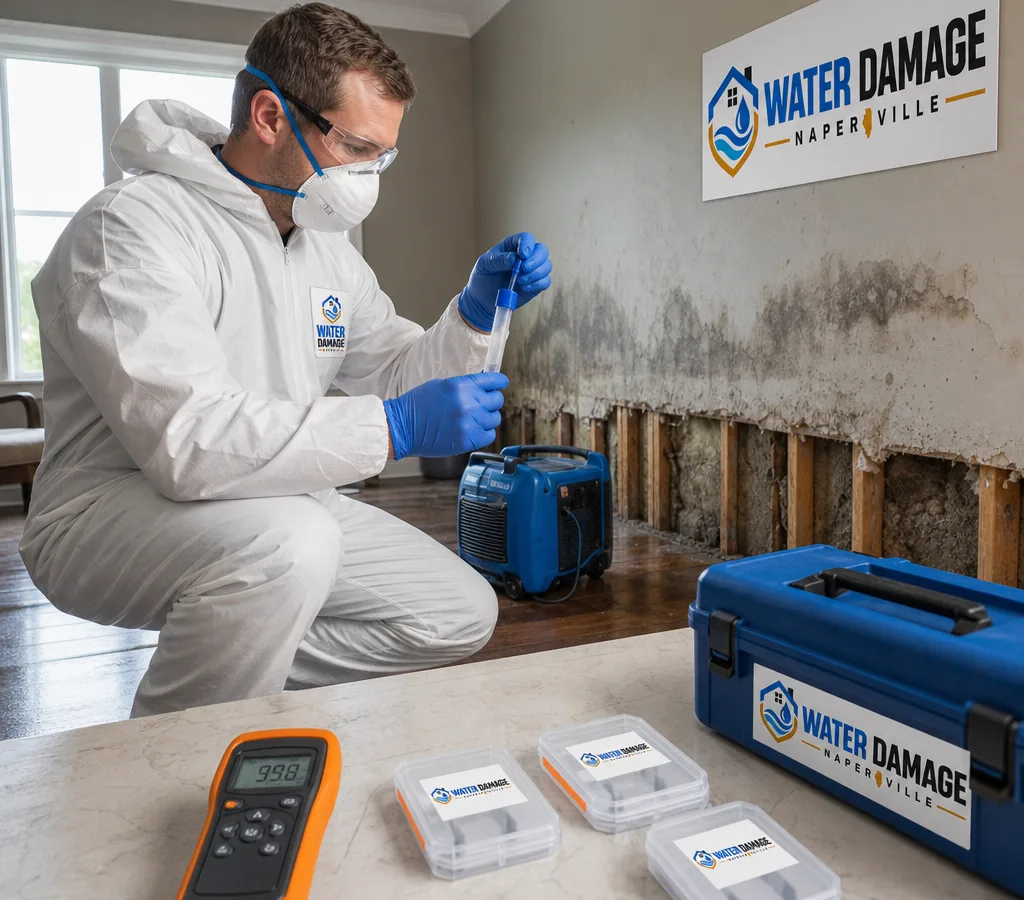
Mold testing in Naperville is about answering three practical questions: Is there mold indoors, how much is in the air compared to outdoors, and where the moisture is that allows it to grow. Mold spores are common in the environment, so the goal is not to “prove” a home has spores. The goal is to document whether indoor conditions point to an active problem.
A good test also avoids common mistakes. Sampling without checking for moisture sources can miss the reason the mold is there. Sampling only one room can miss a hidden area. Treating every discoloration as mold without sampling can also lead to unnecessary work. We approach the inspection as a building-science problem first, then confirm conditions with targeted sampling.
Water Damage Naperville provides mold testing for owners, buyers, sellers, and property managers who need clear, written results and next steps they can act on.
Most appointments start with a walkthrough and a moisture-focused assessment. In Naperville homes, mold concerns often trace back to common Midwest issues like basement humidity, seasonal condensation on exterior walls, or slow leaks under sinks and around tubs.
What we do on site:
After the visit, you receive a plain-language summary that explains what was sampled, what was observed, and what the results mean for your property. If remediation is warranted, the report helps you compare scopes and avoid paying for work that does not match the findings.
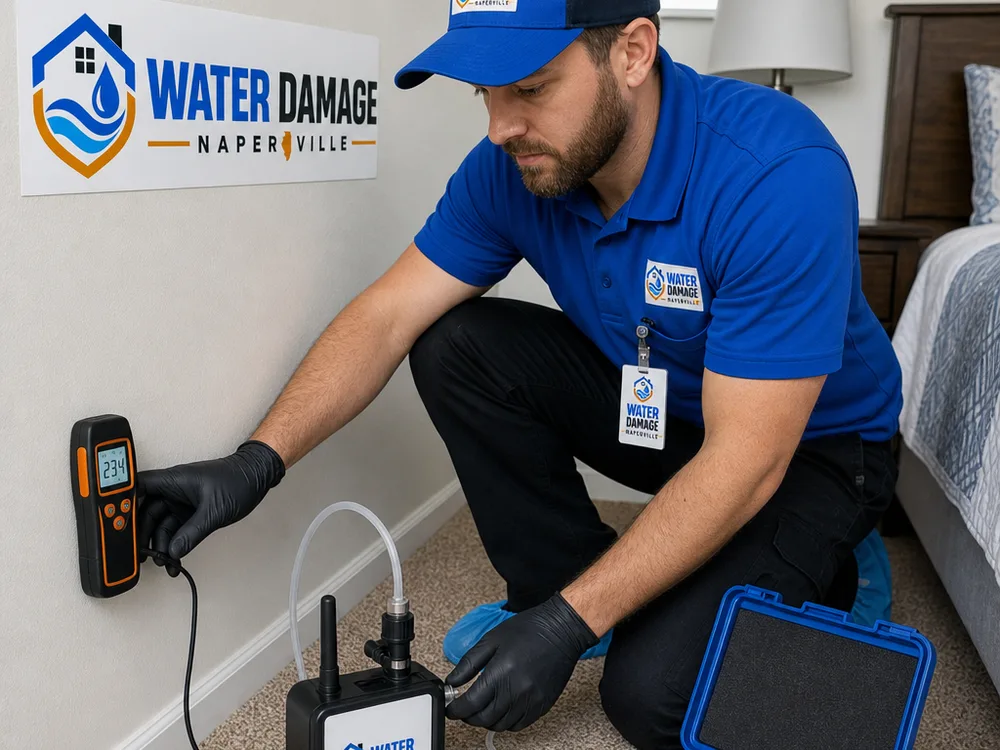
If materials stayed wet for more than a day or two, mold can develop behind baseboards, under flooring, or inside wall cavities even when surfaces look dry.
Odor often points to hidden growth in a basement corner, a closet on an exterior wall, or a damp area around plumbing penetrations.
We can sample a specific area to confirm whether it is mold and help determine whether it is surface-level or likely tied to moisture inside the assembly.
Buyers and sellers use testing to document indoor air conditions and guide next steps before closing, especially when the home has a finished basement.
If symptoms improve when you leave the home, testing can help you make an informed decision about what to address first and where.
Naperville has a mix of newer construction and established neighborhoods with older basements and additions. Regardless of age, the same building physics apply: mold needs moisture, a food source such as paper facing on drywall or dust on framing, and time.
Patterns commonly found in the area include:
If you are trying to decide whether your situation needs immediate attention, start with any sign of ongoing moisture. Mold testing is most useful when paired with finding the moisture source, because fixing the cause is what prevents recurrence.
Mold testing in Naperville typically ranges from about $350 to $850 for a professional inspection with targeted sampling, with larger homes or multi-area investigations sometimes running $900 to $1,500+. A basic visit may include a walkthrough and 1 to 2 samples, while more involved cases add air samples across multiple floors, surface samples, or focused checks of suspected hidden areas.
Final cost depends on how many areas need to be evaluated, how many samples are appropriate, accessibility in attics or crawlspaces, and whether prior water damage or renovations complicate the investigation. Exact pricing is confirmed after we understand the property layout and the goal of the testing, whether for a health concern, real estate transaction, or troubleshooting.
Tell us what you are seeing or smelling, where it is happening, and any recent leaks, plumbing work, or humidity issues. This helps us plan sampling that answers the right question.
We examine the suspect areas, scan for moisture, and note ventilation and humidity conditions that can drive growth.
We take air and/or surface samples based on what we find. Air sampling typically includes an outdoor baseline so indoor results can be compared to normal conditions.
You get clear documentation and practical guidance about what the findings mean, which areas should be addressed first, and how to evaluate a remediation scope if needed.
If you need mold testing in Naperville for a purchase, a musty basement, or ongoing allergy concerns, we can help you move from suspicion to documented answers and a plan.
Call for Emergency HelpMost mold testing appointments take about 60 to 120 minutes, depending on the size of the home and how many areas need to be checked. A focused concern in one room is faster, while a full-home comparison and attic or crawlspace access takes longer.
We use air testing, surface testing, or both based on what you are trying to learn. Air samples help compare indoor spore levels to an outdoor baseline, while a surface sample can confirm whether a specific spot is mold and support decisions about cleaning versus removal.
We cannot see through finishes, but we can use moisture readings, observations, and targeted sampling to determine whether hidden conditions are likely. If the inspection suggests a hidden source, we will explain what limited exploratory access would be needed and where before larger work is planned.
Keep the home in normal living conditions before testing and avoid major changes right beforehand. Opening windows for hours, running air purifiers aggressively, or doing heavy cleaning can temporarily alter airborne spore levels and make results harder to interpret.
Testing can identify types of mold and whether conditions suggest an indoor growth source, but “toxic mold” is not a single scientific category. What matters for decisions is whether there is active growth driven by moisture, the extent of affected materials, and what correction steps are appropriate for the building.
If growth is obvious and localized, you may choose to skip testing and focus on correcting moisture and removing affected materials properly. Testing is most helpful when the source is unclear, the area is large or recurring, you need documentation for a transaction, or you want to verify whether indoor air is affected beyond what you can see.
Yes. Mold problems follow moisture, so we focus on identifying likely moisture drivers during the inspection. If your situation also involves a recent water event, start with an overview of Water Damage Naperville so the next steps stay coordinated.
Tell us what you have noticed and what rooms are involved. We will recommend the right level of inspection and sampling so you get results that are easy to understand and useful for deciding what to do next.